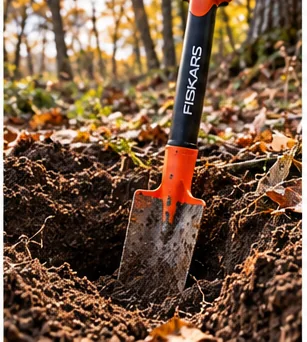
The tools that cope best with frosty ground have a rigid blade, a solid place to push with your foot and a handle you can hold with gloves on. A serrated digging knife or narrow shovel cuts the outline, and a hand digger does the final lift. The harder question is whether you can restore the hole, so cut small and stop when you cannot.
In This Guide
Affiliate disclosure: We may earn a commission from qualifying purchases made through links on this page, at no extra cost to you.
What frost does to recovery
Frost rarely freezes a field evenly. A common pattern is a hard crust on top, a softer layer under it, and wet soil below that. Roots and old turf make the crust tougher still. A tool that slices clean, damp soil in October can bounce off the same spot in January, and the hole you leave behind does not behave the way a normal hole does. Frozen chunks do not knit back together, and a lid of turf that cracks into pieces is hard to set down so it looks untouched.
That changes what you want from a digging tool. In soft ground, almost anything works. In frosty ground, the edge, the handle and the way the tool takes your weight start to matter. If you have not read it yet, our frozen ground guide covers what happens to the signal and whether to dig at all. This post is about the tools and the cutting, once you have permission and the ground allows it.
Which tools cope with a frost layer
No tool is made for frozen turf specifically, so the comparison below is about trade-offs, not ratings. Your own soil, frost depth and body will decide the rest.
| Tool | Where it helps in frost | Where it falls short |
|---|---|---|
| Hand digger or trowel | Good for small, shallow targets once the crust is broken; easy to carry | Thin blades can flex or bend on a hard crust; hard on wrists and the handle joint |
| Digging knife with a serrated edge | The saw edge scores a clean outline through roots and the crust | Not meant for prying; slow if the crust is thick |
| Full-size shovel with a step or footrest | Lets you use body weight to cut through the crust; a narrow blade cuts a neat plug | Heavy to carry; a wide blade removes more turf than you want |
| Folding or short-handled shovel | A compromise you can keep in the car or a pack | Weaker hinge or locking points; check that it holds under load |
| Pry bar or pick-style tool | Breaks very hard ground | Rough on turf and on any buried target; most clubs and land managers frown on it for plug cutting |
For most hunters the pairing that works is a sturdy digging knife or short shovel for the outline and a hand digger for the final lift. Our digging tool guide and the hand digger versus shovel comparison go through the choices in normal conditions. What matters in frost is a rigid blade, a solid step to push on and a handle you can hold with gloves on.
Cutting a plug when the top inch is hard
The usual advice is to cut a three-sided flap, fold it back, dig, and lay it down again. That still works in a shallow frost, with a few changes. The steps are in the order most hunters follow.
- Pinpoint first. A tight pinpoint means a smaller opening. In frost, every extra inch of outline is more cracked turf. Our pinpointer guide covers the options.
- Score before you dig. Mark the outline with a knife or the corner of the shovel blade, working around the target in a small circle or a U. Several light passes cut more cleanly than one hard stab.
- Cut deeper on the hinge side. If you are making a flap, leave the back edge uncut so the turf stays attached. Frost can make the hinge brittle, so do not fold it back far.
- Lift, do not twist. Slide the blade under the crust and lift it in one piece. Twisting a tool in a frozen plug is how handles and blades fail.
- Check the soil below. The ground under the crust is often softer. Move it onto a mat or a scrap of cloth so frozen crumbs do not scatter across the grass.
- Return everything. Put the soil back first and the lid last. Press it down by hand or with a boot, and look at it from a few steps back.
If the lid breaks into pieces, fit them together as best you can and press them in. If you cannot make the spot look right, that is information. Stop digging in that area, and think about whether it is time to stop for the day. Our clean plug guide has the standard method for ground that is not frozen.
Protect your hands, wrists and pinpointer
Cold, hard ground punishes the people and the gear using it. A few habits cut the risk.
- Do not pry with your pinpointer. Most are not built to be levers, and a cracked tip ends the hunt. Use the digger.
- Use gloves with grip. A thin glove that lets you keep hold of the tool is better than a thick mitten that lets it slip. See our cold weather gear guide for layering.
- Warm up first. Stiff hands and cold shoulders make slips more likely. Take a few minutes to loosen up before you start cutting.
- Mind your footing. A shovel blade pushed hard into the ground can skip off a frozen patch. Keep your feet wide and your balance low.
Serrated digging knife
Look for a rigid blade, a handle you can grip with gloves and a sheath. Read the description for what the tool is designed to do before you lean on it.
Short shovel with a step
Choose a narrow, sturdy blade with a footrest. A folding model is convenient, but read how the hinge and locking collar are built.
Know when to stop
Some days are simply not recovery days. If the crust will not cut without shattering, if you are making holes you cannot restore or if the ground is frozen solid below the surface, the right choice is to flag the target and come back after a thaw. Mark it with your phone, a landmark or a photo of the area, not by leaving anything in the ground. Many land owners and managers do not allow digging in frozen or saturated ground at all, and the rules vary by land type and by state. Ask first. Our laws and etiquette guide is a general starting point. It is not legal advice.
It also helps to keep a small mat or plastic sheet in the car for sorting soil, and a bag for the trash you dig up, so the next visitor finds the spot as you found it.
Bottom line
Frost makes the top inch hard, but the real problem is restoring the hole. A rigid knife or narrow shovel for the outline, a hand digger for the lift and a small pinpoint keep the damage low. Do not pry with your pinpointer, and flag the target for later if you cannot cut a plug you can put back.
Frequently Asked Questions
What is the best tool for digging frozen ground?
No single tool is made for it. A rigid digging knife or narrow shovel with a step cuts the outline, and a hand digger finishes the lift. Choose a solid blade and a handle you can grip with gloves.
Can I use a pinpointer to pry out a target?
No. Most pinpointers are not built as levers, and a cracked tip ends your hunt. Use a digger and keep the pinpointer for locating the target.
Can I cut a clean plug in frosty soil?
Sometimes, if the frost is shallow. Score the outline with several light passes, lift in one piece and avoid twisting. If the turf breaks apart and you cannot restore it, stop.
Should I dig at all when the ground is frozen?
Often not. Many land owners and managers do not want digging in frozen or saturated ground, and rules vary by land type and state. Ask first, or flag the target and return after a thaw.
Is a folding shovel strong enough for frost?
It may be, but the hinge and locking collar are the weak points. Read how the shovel is built and be gentle on a hard crust.
Sources and verification
This is general tool advice and quotes no manufacturer specifications or ratings. We did not review specific products, and how well a tool copes with frost depends on the soil, the depth of frost and your technique.
Check the maker's description for what a digging tool is rated to do. Confirm digging rules for frozen ground with the land owner or manager before you start.
DetectorGear.co is a participant in the Amazon Services LLC Associates Program and the eBay Partner Network. When you purchase through links on this page, we may earn a commission at no additional cost to you. Affiliate relationships do not influence our editorial recommendations. Learn more.