Products and configurations to compare
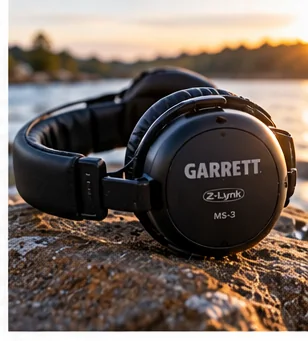
Garrett Z-Lynk transmitter receiver kit
Purpose-built detector wireless.
Best when: detector has compatible audio jack
Watch for: connector/adaptor needed
1/4-inch detector headphones
Reliable and inexpensive.
Best when: you value zero maintenance
Watch for: cable management
3.5mm-to-1/4 adapter set
Cheap way to match jacks.
Best when: you already own good headphones
Watch for: weather sealing/mono-stereo wiring can vary
Generic Bluetooth can feel 'off'
Audio position trails coil position.
Adapters add another battery
Charge management becomes part of the hunt.
Wired is hard to beat technically
Its weakness is ergonomics, not sound timing.
Jack size is not the whole compatibility story
Mono/stereo wiring and waterproof connectors matter.
Secure the transmitter
A dangling module is easy to lose.
Low latency matters because the coil is moving
Detector audio is positional information. A tone delayed behind the coil's actual location makes target centering feel vague. Wired headphones remain the simplest zero-lag option. Detector-specific wireless systems such as Garrett Z-Lynk or the low-latency systems bundled with current Minelab machines are designed around this problem.
Audio isolation is not always desirable. Near roads, trails or active beaches, situational awareness may matter more than sealing out every sound. Choose earcup style and volume with the hunt environment in mind.
Water changes the audio decision
Headphones included with many waterproof detectors are not themselves submersible. If the control box and coil are going underwater, verify the exact waterproof headphone connector and depth rating rather than assuming wireless audio follows you below the surface.
Before checkout
- Accessory is compatible with the exact detector model
- Coil connector and firmware support are confirmed
- Waterproof rating matches the actual depth/use
- Wireless audio is low-latency enough for detecting
- Digging tool matches turf, field or beach conditions
- Finds pouch separates sharp trash from keepers
- Recovery tools have holsters or lanyards
- Saltwater gear can be rinsed and dried
- Added weight remains comfortable for multi-hour hunts
- The purchase solves a repeated field problem rather than duplicating existing gear
Buy the accessory that fixes the next hunt
Metal detecting gear is easy to overbuy because almost every accessory is cheaper than the detector. Before ordering, name the field problem in one sentence: “I lose targets in park trash,” “my scoop is exhausting in wet sand,” “my headphone cable snags,” or “the M15 makes my arm tired.” If the product does not fix that sentence directly, leave it in the cart.
Compatibility is the second filter. Detector families use model-specific coils, audio systems and waterproof connectors. Search by exact model and part family, not just brand. A Minelab accessory can still be wrong for another Minelab platform.
First-hunt test
Use new gear on a familiar site. Compare recovery speed, swing fatigue or audio timing against your old setup. Change one thing at a time so you know whether the new coil, headphones or harness actually helped. For beach gear, rinse and inspect it immediately after the first saltwater session to find corrosion-prone fasteners while the return window is still open.
The best accessories disappear into the routine. The target, site and permission should remain the interesting part.
Frequently asked questions
Can any detector use Z-Lynk?
Many with compatible audio output can use the appropriate transmitter/adapter, but verify exact connection.
Can I use AirPods with a transmitter?
Possible technically, but latency can be poor.
Does wireless reduce detection performance?
No, it changes audio delivery.
Best backup?
Carry a wired pair or adapter.
Current product/source checks
Affiliate disclosure: DetectorGear.co participates in the Amazon Associates program and eBay Partner Network. We may earn from qualifying purchases at no extra cost to you. Amazon links use scouttheory-20; eBay links use campaign 5339137014.