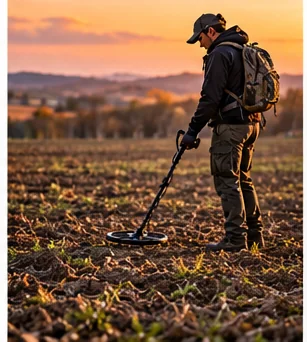
Early spring ground can give up finds because frost, thaw and bare soil leave sites looking and sometimes behaving differently from autumn. Frost heave may nudge small objects, but it is a theory, not a promise. The same thaw leaves soft, wet ground that is easy to damage, so ask first, stay off saturated soil and carry a mud kit.
In This Guide
Affiliate disclosure: We may earn a commission from qualifying purchases made through links on this page, at no extra cost to you.
Why the thaw is worth watching
Early spring is the stretch between frozen ground and full green cover. Fields and parks have not grown over yet, leaf litter has matted down, and the soil is soft enough to dig again. Hunters like it for practical reasons: you can see the ground, it is easy to read and the crowds have not arrived. It also has a reputation for turning up finds that were missed in autumn, and some of that reputation has a plausible explanation.
That explanation is also a good reason to go carefully, because thawing ground is easy to damage. This guide covers what the thaw changes, how to hunt it without leaving a mess and what to carry for mud. It is general advice, so check your own site, your own soil and your land rules.
Frost heave and the idea of finds coming up
Water in soil expands when it freezes and the ground can lift. Over repeated freeze and thaw cycles, soil and the objects in it can shift. Farmers know the effect from the stones that appear in fields each spring. Many detectorists believe the same process can nudge small metal objects toward the surface or change how they sit in the ground, and use it to explain why a worked-over site gives up something new after winter.
It is a reasonable theory, not a guarantee. How much any object moves depends on the soil, the depth of frost, the moisture and the size of the object. If you are hunting a site you have already cleaned out, a return visit after a hard winter is cheap to try, but do not expect miracles. Our guide to hunting a detected-out site has other ways to approach a place that looks used up.
The thaw also removes snow and ice, which cover targets and block the coil from the ground. If you hunted a site in the cold, our frozen ground guide explains what changes in the signal. In spring, the ground is simply back to soil.
Soft, wet ground: easy to dig, easy to wreck
Digging is easier when the ground is soft, but saturated soil is easily damaged. Boots and wheels press ruts into wet turf, and a plug cut from sodden ground turns into mud and does not knit back neatly. Some land owners and managers ask hunters to stay off wet or soft ground for exactly that reason. The rules vary by site and by state, so ask first. Our guide to permission on private property has a practical way to ask.
A simple check helps. Press a boot into the grass. If it leaves a deep, wet print or water comes up around it, the ground is probably too wet to dig without damage. Wait a few days, hunt a firmer area or scout without digging.
Wet soil also changes how the detector behaves. Moisture and minerals together can alter the ground signal, and conditions can differ from one part of a field to another as the thaw moves through. Re-check your ground balance when the soil changes, as explained in our ground balance guide, and check your manual for how your machine handles it.
Farm fields in early spring
Fields are the classic spring site, but timing matters. A field that was harvested in autumn may be tilled, planted or soaked by now. Always ask the owner or tenant about the crop calendar and where you can walk. Do not walk or dig on planted ground. Our fall field hunting guide covers how to approach the farm code, and the same courtesy applies in spring: close gates, avoid ruts, fill every hole and pack out trash.
Drainage matters too. Low corners, ditch edges and field margins tend to stay waterlogged longest, so start on higher, drier ground and work toward the wet areas as the soil dries. Hunting in order of dryness keeps your boots, your coil and the field in better shape.
Fresh tillage can bring up targets, and it can also bury them. A field that has just been worked is rough underfoot and slow to sweep, so give it a chance to settle after rain before you decide it is no good.
The mud kit
A muddy site is hard on gear and on you. The kit below is short and cheap, and most of it lives in the car.
- Waterproof boots with a firm sole and a grippy tread. Slipping with a detector in your hands is the quickest way to break a shaft.
- A small mat or tarp to put soil on while you dig, so the turf is not smeared.
- A coil cover that fits snugly. Mud packs under a loose one and causes noise.
- A towel and a bucket or jug of water for cleaning hands, digger and boots before you get back in the car.
- Spare gloves and socks in a dry bag.
- A finds pouch that closes so a muddy coin does not smear across your clothes.
Waterproof boot scraper and brush
A stiff brush saves a lot of time on caked boots and diggers. Look for one that fits a car trunk or a bucket.
Pop-up dig mat or tarp
Choose a size that fits your plug and keeps soil clean. Pick a color that is easy to see and easy to wipe.
The care guide covers cleaning the coil and shaft afterwards. If you dug in cool, wet soil, rinse and dry your kit before you put it away. Mud left in cam locks or connectors can cause trouble later.
Cutting a plug in thawing ground
As the thaw works down, you may meet a frozen layer below a soft top, or a soft layer over a frozen one. Cut a small plug, check the depth and stop if you hit ice or rock. Our clean plug guide covers the method, and the frosty soil tools guide covers what to carry when the top inch is still hard. Press the plug down by hand when you finish, then step back and look at it. If the spot still looks wounded, fix it.
Bottom line
The thaw gives you bare, readable ground and a plausible chance at targets that frost has shifted. It also gives you soft, wet soil that is easy to damage. Ask about land rules and crop timing, stay off saturated ground, re-check ground balance, carry a mud kit and fill every hole.
Frequently Asked Questions
Is early spring a good time to metal detect?
Many hunters like it because the ground is bare, readable and soft enough to dig. It also brings mud, wet soil and land rules that limit digging, so check before you go.
Does frost bring metal objects closer to the surface?
Freeze and thaw cycles can shift soil and objects, and many hunters believe it can nudge small items. It is not guaranteed and depends on soil, frost depth and the object.
Should I dig in wet, thawing ground?
Only if the ground is firm enough to cut a plug you can restore and the land owner or manager allows it. Saturated soil is easily damaged.
Do I need to ground balance again after the thaw?
It is a good idea to re-check whenever soil conditions change. Thawing, wet and drying soil can all change the ground signal.
Can I detect farm fields in early spring?
Only with permission and not on planted ground. Ask the owner or tenant about the crop calendar and where you may walk, and fill every hole.
Sources and verification
This is general advice and quotes no soil, frost or moisture measurements. Frost heave is described in general terms, and the idea that it moves metal objects is a theory hunters discuss, not a tested result.
Confirm digging rules and crop timing with the land owner or manager, and check your detector manual for ground balance guidance.
DetectorGear.co is a participant in the Amazon Services LLC Associates Program and the eBay Partner Network. When you purchase through links on this page, we may earn a commission at no additional cost to you. Affiliate relationships do not influence our editorial recommendations. Learn more.