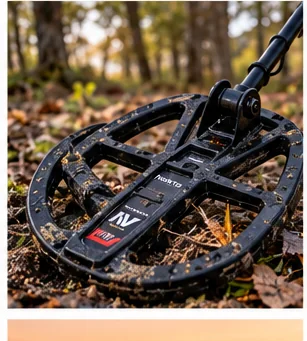
Whether a replacement armrest, stem or cable fits depends on your exact model and version, and only the maker or an authorized seller can confirm it. Identify your detector, describe and photograph the part, get the fit confirmed in writing and check the return policy. This guide gives that method, not a compatibility list.
In This Guide
Affiliate disclosure: We may earn a commission from qualifying purchases made through links on this page, at no extra cost to you.
Why fit is the hard part
Armrests, shafts and cables look like simple parts. They are not always interchangeable. Mounting holes, cuff shapes, shaft sections, locking collars and connectors can differ between models and between generations of the same model. A part that looks right on a screen may not bolt on, may not reach, or may plug in and fail to work.
This guide does not give a list of which part fits which detector, because that list belongs to the maker and changes with each revision. What it gives is a method for finding out for sure: identify the machine, measure and photograph the part, ask the right source and check the listing before you pay. That method works for any brand. Your manual and the maker's parts or support page are the authorities on compatibility.
Step one: identify the exact detector
A model name is rarely enough. Gather as many of these as you can, and keep them in a note on your phone:
- Full model name. Including any suffix, edition or number, exactly as printed.
- Generation or version. Makers sometimes revise a model. Look at the manual, the box, the control box label and the maker's site for version marks.
- Serial number or label. Photograph it. The maker's support team may ask for it.
- Purchase date and where you bought it. It helps with both identification and warranty.
- Coil model and size. Some cables and mounting parts belong to a particular coil, not to the detector alone.
Our coil cover matching guide uses the same idea for covers, and it is worth reading because the logic is the same.
Step two: describe the part you need
Before you search, write down what the part does and how it attaches. The table lists what to note for each common wear part. It does not state any sizes, because those depend on your model.
| Part | What to note and photograph | Common wear signs |
|---|---|---|
| Armrest | How it mounts to the shaft (bolts, clamp or strap), the cuff shape and size, the strap or hook-and-loop closure, the pad and how many fasteners | Cracked shell, stretched or frayed strap, worn pad, loose mounting |
| Stem or shaft section | Which section it is (upper, middle, lower), the locking style (cam, twist or pin), how the sections join and how the coil mounts at the end | Slipping section, stripped threads, bent tube, cracked lock |
| Coil cable and connector | Connector shape and how many pins it has, how it locks, cable length and whether the cable is straight or coiled | Kinks, cracked jacket, intermittent signal when moved, bent pins |
| Coil mounting hardware | Bolt type and length, washers, ears or lugs on the coil and shaft | Cracked ears, wobble, stripped bolt |
| Control box mount or battery door | Bracket, screws and the seal or gasket | Loose box, damaged gasket, cracked latch |
Photograph each part from several angles, with a coin or ruler beside it for scale. A good photo set saves a lot of back-and-forth with a seller or a support team.
Step three: ask the right source
- The maker's parts or support page. Many makers sell parts or list authorized sellers. Start here, using your model and version.
- The manual's parts diagram, if it has one. It may name the part so you can search for it exactly.
- An authorized dealer. Dealers can often confirm fit if you give them the full model name and photos.
- A detecting club or forum. Experienced owners often know which parts wear and where to find them. Treat what they say as a lead to confirm, not a fit guarantee.
- Marketplaces. Listings can be handy for used or discontinued parts, but check them carefully, as explained below.
Ask the seller or the maker to confirm the fit for your exact model and version in writing, and keep the reply. Our cases and storage guide also stresses checking that replacement and service parts remain available before you commit to a machine.
Reading a parts listing
When you search a marketplace, a few checks reduce the odds of a wrong part:
- Does the listing name your exact model and version? "Fits most detectors" is a warning sign.
- Are there clear photos of the connector or mounting end? Compare them with your photos.
- Is it original or aftermarket? Aftermarket parts can be fine, but ask what the seller knows about them, especially for cables.
- What is the return policy? If the part does not fit, you want a clear way to send it back.
- Is it a used part from another machine? Used parts can be good value, but they have their own wear. Check its condition in photos.
Replacement armrest cuff or strap
Search with your full model name and look for listings that name that model. Compare the mounting photos with your own before ordering.
Replacement shaft or stem section
Shaft parts are often model-specific. Confirm the section, the locking style and the coil mounting end with the seller.
Cables deserve extra care. A damaged coil cable can cause erratic signals that look like other faults, as our care guide notes. A replacement should match the connector and the cable specification your model expects. Ask the maker or an authorized dealer before you buy a cable from an unknown source, and do not splice or solder a coil cable unless the maker or a qualified repair service tells you it is fine for your model.
Fit it safely, and check the warranty
Switch the detector off and remove the batteries before you disconnect a cable or take apart the shaft. Follow the manual's steps, keep the old part until the new one works and tighten fasteners only as far as the manual allows. After a cable or coil change, run a bench test with a known target and check that the signal is stable. Our tune-up checklist describes a simple bench test.
Warranty matters here. Replacing a part yourself or using a non-original part might affect your coverage, depending on the maker's terms. Read the warranty first, as explained in our warranty checklist, and if the machine is still covered, ask the maker before you repair it.
Bottom line
Do not buy a part by appearance. Identify the exact model and version, photograph and describe the part, ask the maker, a dealer or the seller to confirm fit for that model in writing, and check the return policy. Treat cables with extra care, switch the detector off before swapping anything and read the warranty first.
Frequently Asked Questions
How do I know a replacement armrest will fit my detector?
Match it to your full model name and version, compare the mounting photos with your own and ask the maker or seller to confirm the fit in writing.
Are metal detector stems and shafts interchangeable?
Do not assume so. Sections, locking styles and coil mounting ends can differ between models. Confirm with the maker or an authorized dealer.
Can I use an aftermarket coil cable?
Possibly, but a cable must match the connector and specification your model expects. Ask the maker or an authorized dealer first, and check the return policy.
Where do I find the exact model and version of my detector?
Look at the manual, the box, the control box label and the maker site. Photograph the serial number or label and keep it in a note.
Will replacing a part myself affect my warranty?
It might, depending on the maker. Read the warranty first and ask the maker before repairing a machine that is still covered.
Sources and verification
This guide quotes no part numbers, sizes, connector types or compatibility lists. Nothing here claims that a particular part fits a particular detector; confirm fit with the maker or seller for your model.
Confirm fit with the maker, an authorized dealer or the seller, and follow your manual for any disassembly or repair.
DetectorGear.co is a participant in the Amazon Services LLC Associates Program and the eBay Partner Network. When you purchase through links on this page, we may earn a commission at no additional cost to you. Affiliate relationships do not influence our editorial recommendations. Learn more.